Software
Google's Stitch Update Puts Figma Under Pressure
March 25, 2026
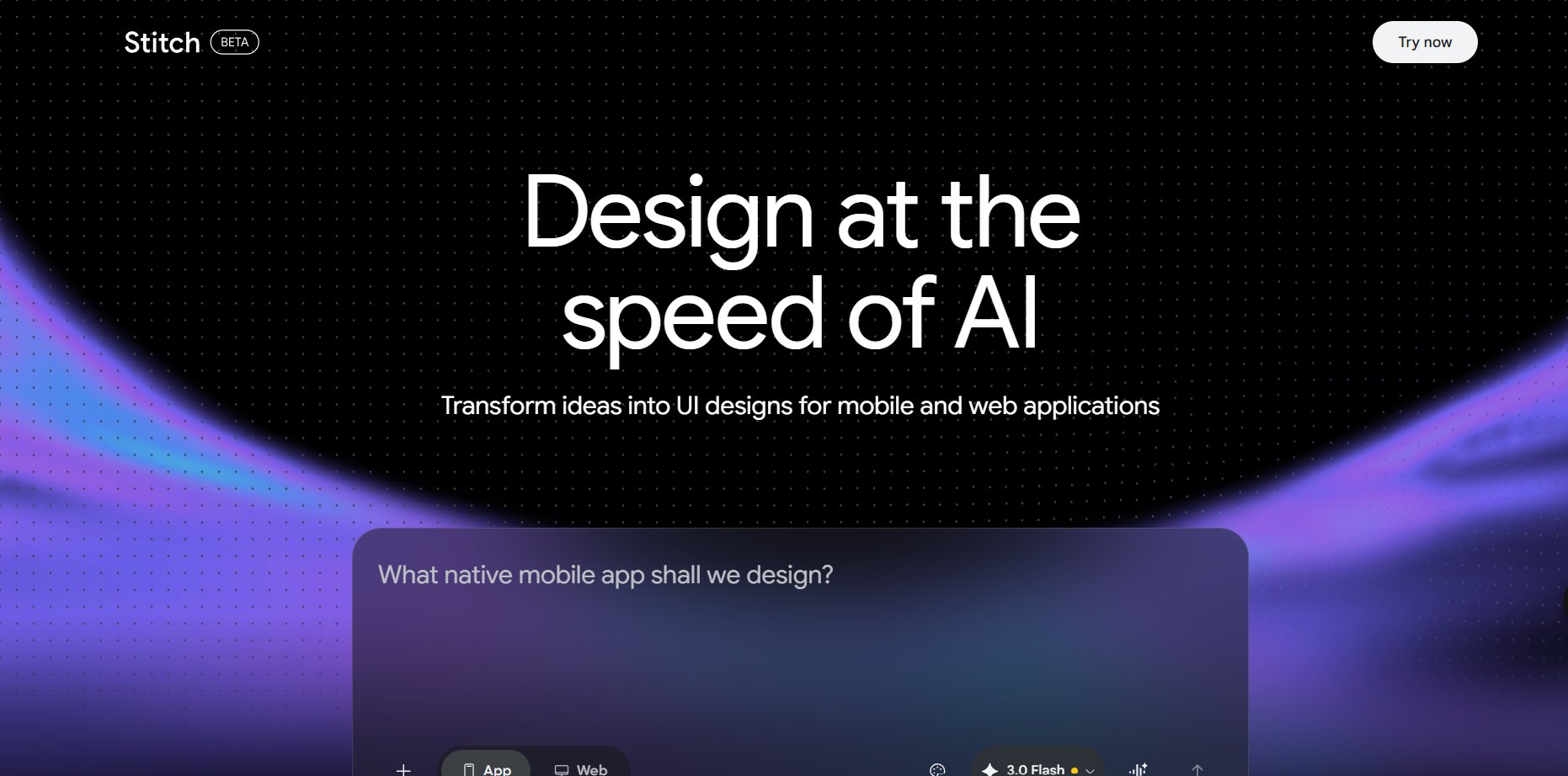
Read Original: Fast CompanyOn March 19, Google Labs shipped a major redesign of Stitch, its AI-native UI design tool. The update introduced five new capabilities: an infinite canvas that holds text, images, code, and UI components in one workspace; a design agent that tracks full project history and generates multiple design variants at once; voice controls that let users direct the canvas through spoken commands; instant prototyping that converts static screens into clickable flows in one step; and DESIGN.md, a portable file format that stores design rules for reuse across projects.
Stitch also launched an MCP server and SDK that connect directly to coding tools including Claude Code, Cursor, and Gemini CLI. This means a designer or developer can generate a UI in Stitch and pull it directly into their code pipeline without switching tools. Google calls its overall approach "vibe design," a term for using plain language or voice to describe what an interface should look and feel like, and letting AI generate it. Stitch offers 350 free generations per month and exports to Figma format or HTML/CSS code.
The market reaction was immediate. Figma shares dropped 8% on the day of the announcement and fell a further 4% the next day, taking year-to-date losses to about 35%. The concern from investors is not that Stitch will replace Figma for professional design teams with established component libraries and workflows, but that it will intercept the next wave of users, product managers, developers, and founders, before they ever adopt Figma at all.
For digital agencies and solopreneurs in Nigeria, Stitch is worth testing right now. If you are building landing pages, app mockups, or client presentations, a free tool that generates a first draft in 20 minutes changes how long ideation and visual work takes. Pair it with Figma for refinement, and the full design-to-handoff cycle becomes significantly faster.
Understanding the tools reshaping design workflows helps you serve clients better and stay ahead of competitors who are still doing everything manually.
Source:Fast Company